
Fiber, explained
Why Metronet fiber is worth switching to
A plain-language look at what fiber actually changes about your internet — written for people deciding whether it's worth the switch, not for people who already know what symmetrical bandwidth means.
It's 100% fiber, not copper
Metronet's network runs fiber-optic cable all the way to your home, not just to a box down the street. Data travels as light through glass rather than electricity through copper — faster, more consistent, and far less prone to interference than the coaxial cable behind most cable internet. It also means your speed doesn't degrade the further you sit from the neighborhood node.

Upload speed matches download speed
Cable internet gives you a fast download and a slow upload — often a twentieth of the headline number. Fiber is symmetrical: your upload speed equals your download speed. That's the difference between a video call that freezes and one that doesn't, a cloud backup that finishes overnight instead of over a weekend, and a 4K file that uploads in seconds instead of minutes.

Every device, at the same time
Streaming in the living room, a video call in the office, a console in the basement, cameras out front — fiber bandwidth doesn't get divided up the way shared cable does under neighborhood load. More devices doesn't mean more slowdown, and evening peak hours don't turn into a bandwidth negotiation between family members.

Built for how you actually work and play
Remote work depends on stable uploads for calls and file sharing. Competitive gaming depends on low, consistent latency rather than a big peak number. Streaming depends on sustained bandwidth across multiple screens. Fiber is the common thread underneath all three — which is why it's the connection type new-build neighborhoods are wired for.

Simple installation, no long-term lock-in
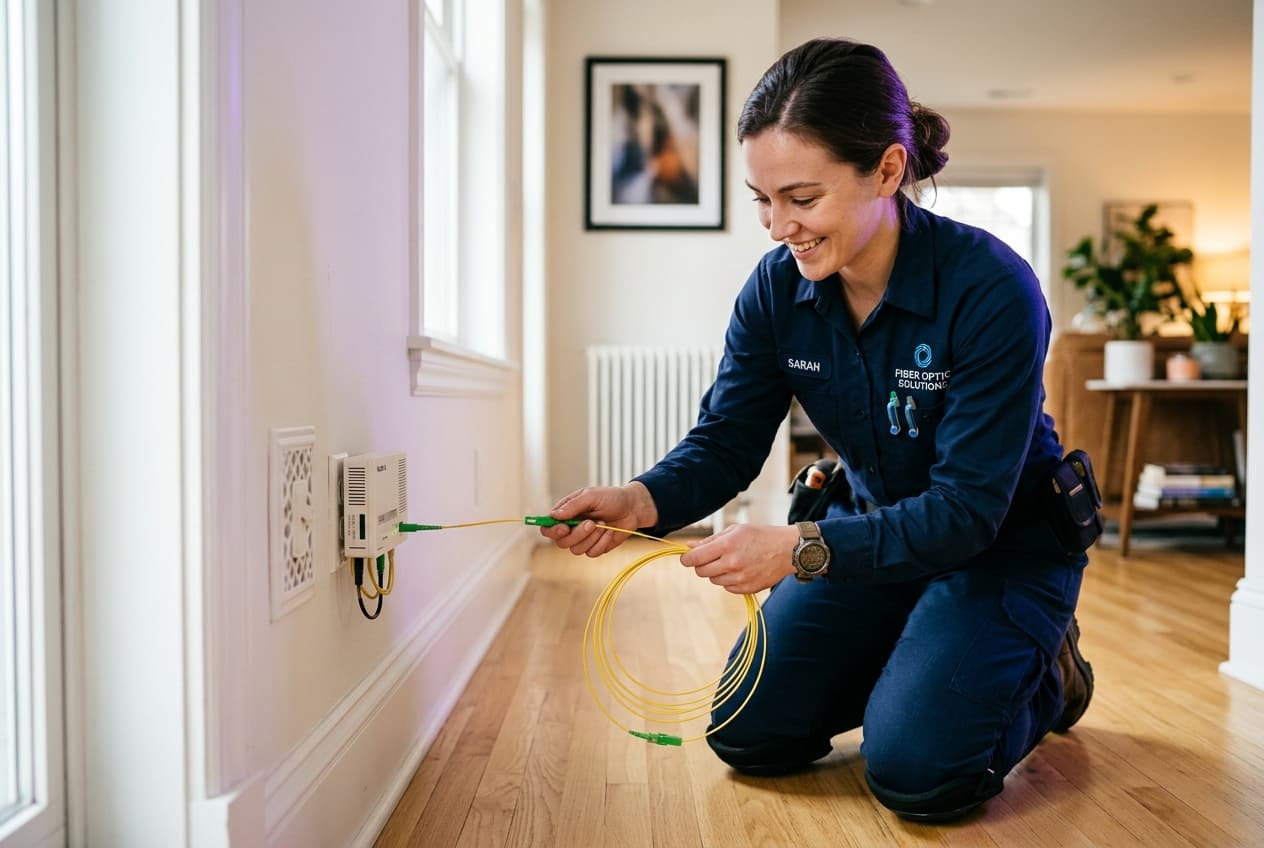
You choose a preferred install date and time window when you order. A technician brings the fiber line to the home, installs the included fiber gateway, and gets your Wi-Fi running. No annual contract is required on any plan, so you're not signing a multi-year agreement to get the advertised rate.
Pricing that doesn't reset in month thirteen
Metronet residential pricing is $60/mo for 500 Mbps, $70/mo for 1 Gig, and $80/mo for 2 Gig with AutoPay — with unlimited data included rather than sold as an add-on. There's no data cap to trip, no overage line item, and no promotional rate quietly expiring into a much higher bill.